The Grind Philosophy: What Southeast Asia's Mobile Gaming Champions Know That US Players Don't
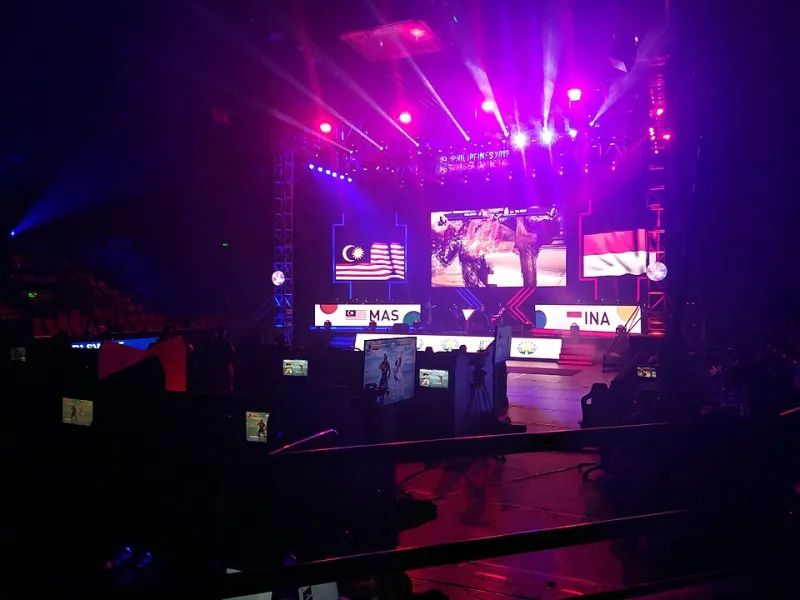
Photo: Hariboneagle927, CC BY-SA 3.0, via Wikimedia Commons
If you've followed mobile esports at all over the past five years, you've noticed something: teams from the Philippines, Indonesia, Thailand, and Malaysia keep showing up on the podium. At Mobile Legends: Bang Bang World Championships. At PUBG Mobile Global Championships. At regional qualifiers for virtually every major mobile title. Southeast Asian players aren't just competitive — they're structurally dominant in ways that go way beyond individual skill.
So what's actually going on? We dug into the competitive culture, talked to players and coaches with roots in the SEA scene, and broke down the mental frameworks and training habits that are producing world-class mobile athletes at a rate that should have US players taking serious notes.
Community First, Individual Second
One of the starkest differences between SEA mobile gaming culture and the American approach is how community functions within competitive development. In the US, the path to going pro is often a solo grind — rank up, build a stream, get noticed, maybe catch a team's eye. It's individualistic by design, reflecting broader American cultural values around personal achievement.
In Southeast Asia, the path frequently runs through the community. Internet cafes — yes, they're still thriving across the region — function as informal training hubs where players observe each other, give real-time feedback, and develop a shared vocabulary around competitive play. Neighborhoods in Manila or Jakarta might have dozens of players grinding the same game, watching each other's replays, and developing team strategies organically before any formal organization enters the picture.
"When I was coming up, I had ten guys around me every day who were all better than me at different things," explains one former competitive Mobile Legends player from Cebu who now coaches a semi-pro squad. "You couldn't hide weak spots. You got better because you had to."
That kind of constant, communal accountability creates a feedback loop that solo grinding on a US server — where you might never see the same opponents twice — simply doesn't replicate.
The Mental Game: Pressure as a Training Tool
Ask any SEA esports coach about the mental side of competition and you'll get a consistent answer: pressure is not something to be avoided. It's something to be trained.
This shows up practically in how SEA teams structure scrimmages. Rather than treating practice matches as low-stakes reps, top-tier squads in the region simulate tournament conditions — including the psychological weight of elimination scenarios — regularly. Communication protocols, tilt management, and in-game decision-making under stress are all treated as coachable skills, not personality traits you either have or you don't.
Compare that to the US scene, where mental coaching is still something of a luxury reserved for organizations with real infrastructure. Most American mobile gamers are figuring out tilt management through trial and error, if at all. The SEA approach treats the mental game as foundational, not supplementary.
"The physical mechanics — aiming, timing, map awareness — those can all be learned fast," says a Thai coach who's worked with multiple championship-qualifying rosters. "What separates players at the highest level is whether they can perform their best when the lobby is silent and everything is on the line. That takes deliberate training."
Structured Repetition vs. Unstructured Hours
Here's something that surprises a lot of Western players when they first hear it: the top SEA mobile gaming programs don't necessarily log more hours than their US counterparts. What they do differently is how those hours are structured.
Rather than open-ended ranked grinding, elite SEA training programs break sessions into focused blocks — mechanics work, VOD review, team coordination drills, and scenario-based practice where specific situations (late-game comebacks, objective control under pressure) are repeated until execution becomes automatic.
This mirrors methodologies from traditional sports coaching, and it's no coincidence. Several of the most successful SEA mobile esports organizations have brought in coaches and sports psychologists with backgrounds in football (soccer), basketball, and martial arts. The discipline frameworks translate cleanly.
For US mobile gamers looking to genuinely level up, the takeaway is actionable: stop counting hours and start tracking what those hours contain. An intentional two-hour session with defined goals beats a six-hour ranked grind every time.
The Role of Betting Culture in Sharpening Competitive IQ
It's worth acknowledging something that plays a real role in Southeast Asian gaming culture's competitive edge: the region's familiarity with sports betting and wagering has created a population of gamers who think probabilistically about competition in ways that casual Western players often don't.
In markets where mobile esports betting is normalized and accessible, fans and players alike develop a sharper analytical relationship with the game. Understanding odds, reading team form, evaluating meta shifts — these aren't abstract concepts. They're things people engage with practically, often with money on the line. That analytical sharpness bleeds into how players approach their own competitive development.
US players getting into mobile esports wagering — which is growing fast — are starting to develop similar instincts. When you have skin in the game, you watch differently. You analyze differently. And eventually, if you're also a competitor, you play differently.
What US Players Can Take From This
None of this means American mobile gamers are permanently behind. The gap is cultural and structural, not genetic — which means it's closeable. Here's where to start:
Build a real training circle. Find three to five players at your level who are serious about improving. Run regular scrimmages. Review footage together. Give honest feedback. The solo grind has a ceiling; collaborative development doesn't.
Treat mental reps as real reps. Practice high-pressure scenarios deliberately. Simulate tournament conditions in your scrimmages. Talk openly with teammates about tilt and how you manage it.
Break your sessions into blocks. Assign specific goals to specific practice windows. Mechanics, communication, and strategy review should each get dedicated time rather than being thrown together in an unstructured grind.
Engage analytically with competitive content. Watch pro SEA matches — not just for entertainment, but as study. Platforms covering SEA esports, including everything we track here at UFAFat Mobile, give you direct access to the strategies and meta developments that are shaping global competition.
The Bottom Line
Southeast Asia's mobile gaming dominance didn't happen by accident. It grew out of a culture that treats competition seriously at every level, values community accountability over individual glory, and has been sharpening its analytical instincts for years. US players have the talent and the infrastructure to compete — what's missing is the philosophy. And that's entirely learnable.