Squeeze Every Frame: The Budget Device Optimization Tricks Southeast Asian Gamers Swear By
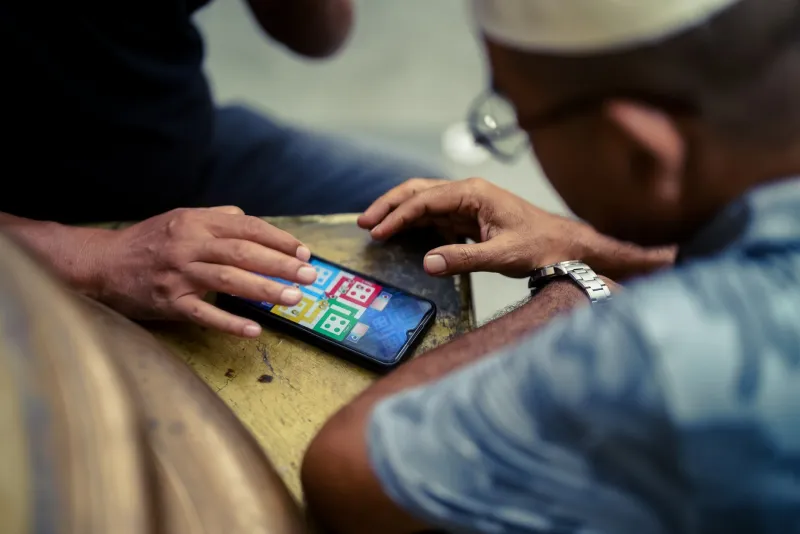
Here's something most US gamers don't want to hear: the guy who just wiped your squad in Mobile Legends is probably running a phone that costs less than your monthly gym membership. And he's not lagging. He's not dropping frames. He's playing cleaner than you on a device that, by American standards, would be considered a backup burner.
This isn't magic. It's methodology. Southeast Asia's mobile gaming community has spent the better part of a decade figuring out how to extract maximum performance from hardware that would make most US tech reviewers cringe. Device upgrades aren't a yearly ritual over there — they're a luxury. So players got creative. They got technical. And honestly? They got better at optimization than anyone in the industry expected.
We dug into the playbook. Here's what they're doing, and how you can steal every single trick.
Start With the Operating System, Not the Hardware
Most US players treat their phone's software like a factory-sealed appliance. Whatever came pre-installed stays installed. That's the first mistake.
In markets like Vietnam, Indonesia, and the Philippines, players routinely strip their Android devices down to the studs before a gaming session. That means disabling background apps — not just closing them, actually disabling them in the developer settings so they can't silently eat RAM. It means turning off automatic sync for every app that isn't essential. Email, social media, cloud backup — all of it gets paused before a competitive session starts.
"The phone doesn't know you're about to play," explains Renz Dela Cruz, a tournament organizer based in Manila who's been coaching mobile esports teams for six years. "You have to tell it. You set the environment before you launch the game, not after you're already losing."
On Android, enabling Developer Options unlocks a surprisingly powerful set of performance controls most casual users never touch. Limiting background processes to a fixed number, adjusting animation scales to 0.5x or off entirely, and forcing GPU rendering for UI elements can collectively shave meaningful milliseconds off your input response time.
Thermal Management Is a Real Skill
Heat is the silent killer of mobile gaming performance. When your phone gets hot, it throttles. Throttling means slower processors. Slower processors mean dropped frames and sluggish input response. US players tend to ignore this until the screen dims and the stuttering starts. Southeast Asian players treat thermal management like a pre-match ritual.
The practical moves here are almost embarrassingly simple, but they work. Play in a cooler room when possible. If you're using a phone case, take it off — cases trap heat, and during extended sessions that adds up. Some players in the region use small clip-on coolers (available on Amazon for under $15) that attach directly to the back of the phone and actively draw heat away from the chipset.
Beyond accessories, there's a software angle too. Apps like CPU-Z let you monitor your chip's temperature in real time. If you're consistently hitting thermal limits within the first 20 minutes of play, that's a signal to investigate what's running in the background and generating heat before you even launch your game.
Storage Isn't Just About Space — It's About Speed
Full storage tanks performance in ways that aren't immediately obvious. When your internal storage is close to capacity, the phone's write speeds slow down, which affects everything from game load times to how quickly assets render during gameplay.
The rule that most Southeast Asian power users follow is the 20% rule: keep at least 20% of your internal storage free at all times. That means regularly auditing what's actually installed, moving photos and videos to cloud storage or a microSD card, and uninstalling games you haven't touched in a month.
Jayden Wiranto, an Indonesian competitive player who's placed in regional PUBG Mobile tournaments, puts it bluntly: "A clean phone is a fast phone. I treat storage like I treat my diet before a match. You don't eat heavy food before you compete. Don't fill your phone with junk before you play."
Network Optimization Beyond Your Wi-Fi Password
US gamers tend to think about internet speed in terms of download bandwidth. Southeast Asian players think about it in terms of latency and packet stability — which is actually what matters for real-time gaming.
One technique that's gained traction in the region is manually selecting game server regions rather than defaulting to automatic. Many mobile titles let you choose your server. Players in Southeast Asia often test multiple servers and stick with whichever produces the most consistent ping, even if it's not technically the closest geographically.
For US players, this means experimenting with server selection in games that allow it. A server with a slightly higher average ping but dramatically less variance will feel smoother in practice than one with a lower average but frequent spikes.
Also worth noting: 5GHz Wi-Fi almost always outperforms 2.4GHz for gaming because it's less congested. If your router supports both bands and you're still on 2.4GHz by default, switching is a five-minute fix that costs nothing.
In-Game Settings: The Overlooked Performance Lever
This one sounds obvious, but it's consistently underutilized. Most mobile games ship with graphics settings tuned for visual appeal, not performance. Southeast Asian competitive players flip that immediately.
The standard approach: drop resolution to medium or low, disable shadows, turn off anti-aliasing, and set frame rate to the maximum your device can sustain without thermal throttling. Visual fidelity takes a backseat. Smooth, consistent frames win matches.
Some games also include a "performance mode" buried in settings that most casual players never find. In titles like Free Fire and MLBB, enabling this mode reallocates processing resources toward frame stability rather than graphical polish. It's not glamorous, but it's effective.
The Mindset Shift US Gamers Need
There's a broader point underneath all of this that's worth sitting with. In the US, the default response to performance problems is to upgrade. Slow phone? Buy a new one. Bad ping? Pay for faster internet. Dropping frames? Get the latest flagship.
Southeast Asian players largely don't have that option, so they developed something more valuable: a deep understanding of the tools they already have. They know their devices at a level most US gamers simply don't bother with because there's never been a financial pressure to learn.
The good news is that the knowledge transfers completely. You don't have to be gaming on a $150 Android to benefit from these optimizations. Running them on a mid-range or even a flagship device will still produce measurable improvements — cleaner frame delivery, lower input lag, longer sessions before thermal throttling kicks in.
The Southeast Asian mobile gaming community built these techniques out of necessity. You can adopt them out of choice. Either way, the results are the same: a smoother, more competitive experience without spending a single dollar on new hardware.
Start with the developer settings. Clean out your storage. Manage your heat. And for the love of the game, check which server you're actually connecting to.
Your next match is waiting.