The Espresso-Fueled Scrim Room: What Southeast Asia's Café Esports Scene Gets Right

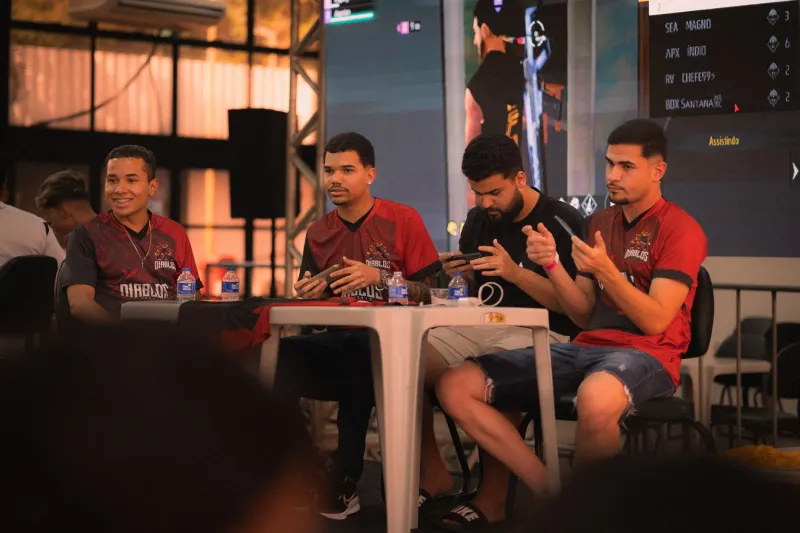
Photo: mobile esports team training in coffee shop with phones, via as1.ftcdn.net
At 7 p.m. on a Tuesday in Bangkok, a café off Ratchada Road looks like a bad place to build a professional esports team. Plastic chairs. Iced coffee. A fan that clicks. Six teenagers crowded around a table, phones propped on cheap stands, a coach leaning over one screen and pointing at a replay.
That is the training ground. Not a $40 million arena. Not a branded team house with a chef. A café with strong Wi-Fi, a power strip, and enough room for five phones and one person who knows what to say.
Across Southeast Asia, ordinary cafés have become the de facto practice layer for mobile esports. They host scrims, coaching sessions, weekly brackets, and the kind of low-stakes repetition that turns good players into consistent ones. US LAN centers have mostly missed this. The question is whether they can copy it without pretending to be something they are not.
More Than a Hangout
A US LAN center usually sells hardware. You pay by the hour for a better PC than the one at home. The business model depends on rigs, chairs, monitors, and a high enough hourly rate to cover all of it.
A Southeast Asian café usually sells time and drinks. The hardware is the customer's phone. The café provides fast internet, power, a table, and a reason to stay. That changes the economics. You do not need to refresh 40 gaming PCs every two years. You need reliable Wi-Fi, enough outlets, and food that people actually want.
That lower overhead makes repetition cheap. A team can scrim for three hours, review for one, and eat dinner for the price of a single US LAN hour. Cheap repetition is how muscle memory gets built.
The Infrastructure Is the Menu
The best cafés are designed around groups, not solo players. Tables fit five. Power strips run down the middle. Phone stands are already on the table. The Wi-Fi has a separate network for gaming. The menu is simple and fast so people do not lose a match waiting for food.
None of that is glamorous. All of it is infrastructure. US gaming cafés often treat mobile players as an afterthought: a couch in the corner, a weak guest network, no place to plug in. If you want mobile esports, you have to design for phones. That means outlets, stands, stable connections, and tables where five people can sit together without shouting across the room.
Coaching Happens in Public
In Southeast Asia, coaching is often visible. A coach sits beside the team, reviews a clip on the same phone, and talks through rotations in plain language. There is no private film room. There is a table, a replay, and a group of players who are used to being corrected in front of each other.
That public setting does two things. It normalizes feedback, and it creates accountability. Players cannot hide behind a headset. They learn to take a note, apply it, and move on. US esports coaching often happens behind closed doors or on Discord, which is fine for privacy but weak for building a local culture.
Local Tournaments as Practice Reps
A café bracket is not a major. The prize might be a few hundred dollars, a gear bag, or free drinks for a month. That is the point. Low-stakes tournaments give teams real reps against unfamiliar styles without the pressure of a travel budget.
Weekly brackets also create a schedule. Players know that every Thursday there is a match. That rhythm matters more than a monthly online cup that everyone forgets. The best Southeast Asian café scenes run the same event on the same night for months. Consistency beats spectacle.
What US LAN Centers Keep Missing
US LAN centers have three advantages: space, existing customers, and experience running events. What they often lack is a mobile-first program. They wait for a big publisher to fund an activation. They buy consoles. They host PC tournaments. Mobile players get a folding table.
That is a mistake. Mobile players are already customers. They play in the same strip malls where LAN centers operate. They do not need a $3,000 rig. They need a table, power, Wi-Fi, and a bracket. The overhead is lower than a PC event, and the audience is broader.
A Playbook for US Grassroots Organizers
- Start with one night. Pick a weeknight that does not compete with major PC events. Call it a mobile night. Keep entry cheap or free with a drink purchase.
- Build for groups. Set tables for five. Put power strips in the middle. Buy a few cheap phone stands and label them.
- Partner with local communities. Find the Discord, the college club, the group chat that already runs mobile scrims. Give them a home.
- Run a bracket, not a demo. People show up for competition. Use free bracket tools. Keep the format simple. Post results.
- Invite a coach. Even one experienced player who can review a clip after matches changes the room.
- Stream the finals. A phone on a tripod is enough. Local storylines travel farther than you think.
The Takeaway
Southeast Asia's café circuit is not magic. It is density, repetition, and low friction. Players can walk in, sit down, scrim, get coached, and play a bracket without spending a fortune. US LAN centers do not need a big-budget esports arena to copy that. They need to take mobile players seriously and make the room work for phones.
For UFAFat Mobile, these cafés are also where competitive storylines start. The next regional star often gets discovered on a plastic chair, not a stage. That is worth paying attention to.