Hardwired Different: The Mental Edge Southeast Asian Gamers Built That US Players Haven't Even Noticed Yet

Let's skip the hardware conversation for a second. You've heard it before — budget phones, low-latency workarounds, all of that. What doesn't get talked about nearly enough is what's happening above the screen. The real divide between Southeast Asian mobile gaming culture and the Western approach isn't technical. It's psychological. And if you're a US player who keeps hitting a ceiling, that's exactly where the problem lives.
This isn't about dunking on American gamers. It's about being honest: Southeast Asia's mobile gaming ecosystem has been stress-testing player psychology for over a decade in ways the US market simply hasn't. The result is a generation of competitors who process decisions faster, manage in-game resources with almost surgical precision, and treat failure as data rather than defeat. That's not a personality trait — it's trained behavior. And the good news? It can be learned.
The Scarcity Mindset That Became a Superpower
Here's something most US players don't think about: when you grew up in a market where premium currency was genuinely expensive relative to your income, every resource decision in a game became a high-stakes call. Across Southeast Asia, mobile gaming took off in economies where spending $5 on a skin wasn't casual — it was a deliberate choice. Players learned to extract maximum value from minimum spend, and that habit bled directly into gameplay.
What does that look like in practice? It means fewer wasted cooldowns. It means knowing exactly when to push and when to hold resources for a better moment. It means reading the game economy — whether that's in-match currency, energy systems, or item timing — with a level of attention most US players reserve for their actual bank accounts.
US gamers, by contrast, grew up in a market where microtransactions were more accessible and the cultural attitude toward spending was looser. That's not a moral judgment, it's just context. But it produced players who sometimes treat in-game resources with the same casualness they treat a Spotify subscription — set it, forget it, don't overthink it. In a competitive environment, that casualness has a cost.
Decision Speed Isn't Just About Reflexes
There's a common misconception that faster gameplay is about reaction time — the physical speed of your thumbs. Southeast Asian mobile pros will tell you that's maybe 20% of the equation. The other 80% is pre-decision architecture: having already thought through the most likely scenarios before they happen, so when the moment arrives, you're not deciding, you're executing a plan you already made.
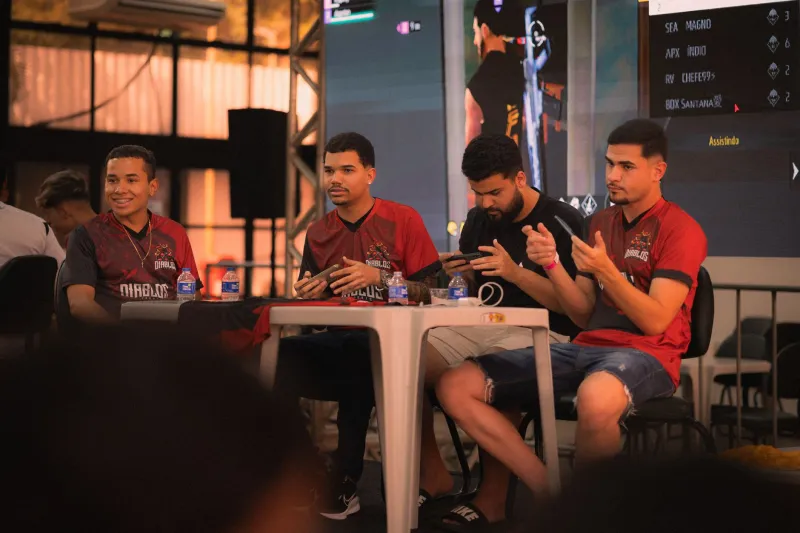
This kind of thinking gets built through high-volume, high-pressure play in competitive ecosystems that have been mature for years. Mobile esports in countries like the Philippines, Thailand, and Indonesia aren't niche — they're mainstream entertainment with real prize pools, real career paths, and real community accountability. When the stakes feel real, the mental training accelerates.
US mobile gaming has been slower to develop that kind of cultural weight. Console and PC gaming got the prestige, the coverage, the career legitimacy. Mobile got treated as the little sibling. That hierarchy shaped how seriously players approached the mental side of mobile competition — and it shows.
The Streaming Culture Feedback Loop
One underrated factor is how differently streaming functions as a learning tool across these two cultures. In Southeast Asia, mobile gaming streams aren't just entertainment — they're dense with tactical commentary, real-time decision breakdowns, and community critique that treats viewers as students. Watching a top Filipino MLBB player stream isn't passive. The chat is analyzing rotations. The streamer is narrating their thought process out loud. It's basically a masterclass in a chat window.
US gaming content has incredible production value and personality, but the educational density is often lower. Highlights get more attention than decision-making breakdowns. The culture rewards spectacle over instruction. That's great for entertainment, less great for actually getting better.
If you want to start closing the gap without buying a new phone or moving to Manila, start treating streams as study sessions. Specifically, seek out Southeast Asian content creators in whatever game you're playing. Turn on auto-translate if you need to. Watch the decisions, not just the moments. You'll start noticing patterns in how they position before fights, how they manage resources three moves ahead, how they respond to setbacks without tilting.
Failure Processing: The Unspoken Skill
This one is hard to talk about without sounding preachy, but it matters too much to skip. The relationship Southeast Asian competitive players have with failure is functionally different from what you typically see in US gaming communities. Losing a ranked match isn't a personality attack — it's a data point. The postgame analysis culture is more normalized, more systematic, and less emotionally reactive.
Part of this comes from necessity. When you're grinding in a competitive scene where your spot isn't guaranteed and the talent pool is enormous, you can't afford to spend 20 minutes raging after a bad game. You review, you adjust, you queue again. That discipline compounds over time into a resilience that's almost invisible until you're playing against it.
Building this in yourself doesn't require a life overhaul. It requires a habit: after every loss, spend two minutes asking one specific question — not "why did my teammates suck" but "what was the one decision I made that I'd change?" Just one. Over months, that habit rewires how you process setbacks at a pretty fundamental level.
Practical Frameworks You Can Start Using Today
So how do you actually bridge this gap from your couch in the US? A few concrete moves:
Resource auditing: After every session, check how you used in-game currency, energy, or cooldowns. Were any wasted? Treat it like a budget review. The goal isn't to be cheap — it's to be intentional.
Scenario pre-loading: Before you hit a match, spend 60 seconds mentally running through the three most likely situations you'll face and how you'll respond. It sounds almost too simple, but it dramatically reduces freeze moments in high-pressure plays.
Cross-regional content diet: Dedicate at least one streaming session per week to watching top Southeast Asian players in your game of choice. You're not just watching gameplay — you're downloading a different decision-making framework.
Tilt tracking: Keep a simple note on your phone. Every time you feel yourself getting emotionally reactive mid-session, mark it. After a week, look at the pattern. When does it happen? What triggers it? Awareness is the first step to control.
None of this is magic. It's just the boring, systematic work that high-level Southeast Asian mobile gaming culture has normalized that US players often skip because the environment hasn't demanded it — yet.
The Window Is Still Open
Here's the honest reality: the gap isn't insurmountable, and US players aren't doomed to permanent tutorial mode. But closing it requires acknowledging that the advantage isn't in the hardware or even the hours logged — it's in the mental architecture built through years of a different kind of competitive pressure.
Southeast Asia didn't get lucky. They got forged. And the frameworks that came out of that forge are available to anyone willing to actually use them.