Playing Through the Ping: How Southeast Asian Gamers Turned Network Lag Into a Secret Weapon
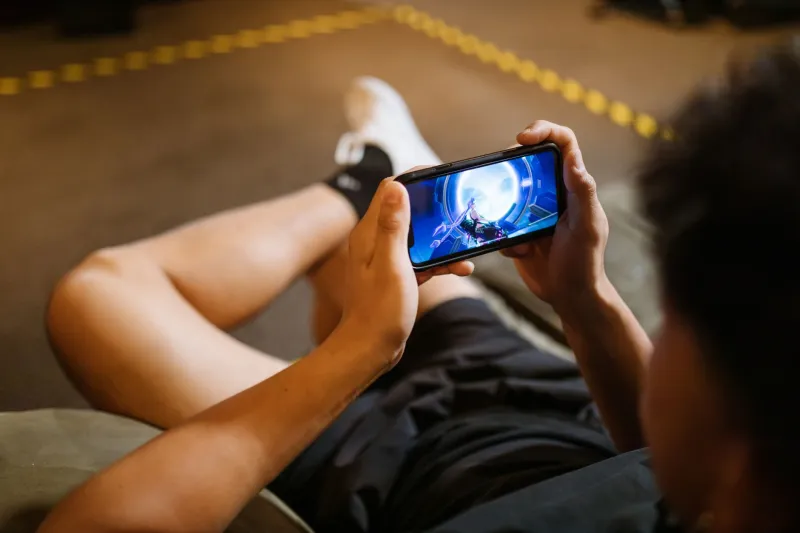
Let's be honest — most American mobile gamers treat lag like a house fire. The moment the ping meter ticks past 100ms, the excuses start flying, the session ends, and the app gets an angry one-star review. Meanwhile, halfway across the world, players in Manila, Jakarta, and Ho Chi Minh City are dropping tournament-winning plays on connections that would make a US gamer physically cringe.
This isn't a story about better infrastructure. It's about something way more interesting: what happens to your brain — and your gameplay — when you spend years adapting to an unreliable network environment.
The 200ms Reality Most US Players Have Never Had to Face
Here's a number worth sitting with: in competitive mobile gaming, a 200-millisecond delay between your input and the game's response is roughly the same as the natural blink reflex in a human eye. It's not huge in the grand scheme of biological time — but in a fast-twitch game like Mobile Legends: Bang Bang or PUBG Mobile, it can be the difference between a clean kill and getting stomped.
For years, Southeast Asian players — particularly in countries with inconsistent 4G rollout and overloaded urban towers — have dealt with this kind of latency as a default condition, not an exception. And rather than waiting for the infrastructure to catch up, they did something remarkable: they changed how they play.
The adaptation isn't conscious for most of them. It's baked in. Ask a veteran Mobile Legends player from the Philippines why they initiate a skill combo a half-beat earlier than the animation suggests, and they'll probably shrug and call it "feel." But sports scientists and esports coaches who've studied this phenomenon have a different word for it: predictive motor calibration.
Your Brain on Bad Wi-Fi
Here's the neuroscience part, and it's genuinely fascinating. When you repeatedly perform an action in a high-stakes environment where the feedback is delayed — like tapping a skill button and watching the effect register 180ms later — your brain doesn't just get frustrated. Over time, it recalibrates.
This is similar to what happens with athletes who train in altitude or resistance conditions. The adaptation isn't just muscular; it's neurological. The brain starts building internal timing models that anticipate the delay, adjusting the "launch point" of motor commands to account for the expected lag. The result? When those players hop on a low-latency server, their reflexes can actually feel too fast — almost like they've been swinging a weighted bat and suddenly picked up a regular one.
For Southeast Asian tournament players, this calibration has become a genuine skill layer. They're not just reacting to what they see on screen — they're executing against a mental model of what the game will show them 200ms from now.
Where This Shows Up in Actual Gameplay
Let's get specific, because this is where it gets practically useful for US players.
In PUBG Mobile, lag-adapted players from the SEA region have developed a technique some coaches call "pre-aiming the ghost" — they position their crosshair not where an enemy currently is, but where the server will register them being when the shot packet arrives. It looks sloppy to an outside observer, but the hit registration tells a different story.
In Mobile Legends, the most decorated SEA players have timing windows for skill combos that account for server tick rates — the intervals at which the game server processes inputs. Rather than mashing buttons at the visually optimal moment, they've learned to fire inputs slightly ahead of what looks right, letting the server-side processing catch up. US players who've tried to replicate their combos frame-by-frame often can't figure out why it doesn't land the same way.
In arena-style betting games — the kind that have exploded across Southeast Asian mobile platforms and are now bleeding into Western markets — this lag-awareness translates directly to wagering decisions. Players who understand server-side processing quirks know which game states are reliable indicators and which are artifacts of latency. That's not a small edge when real money is on the line.
What US Players Are Actually Missing
The irony is brutal: American mobile gamers often have better average connections than their SEA counterparts, but that advantage has produced a kind of latency complacency. When lag is rare, you never develop the mental toolkit to work around it. When it does show up — say, during a tournament with international servers, or on a mobile connection during a crowded event — US players have no adaptive layer to fall back on.
Think of it like this: if you've only ever driven on smooth highways, a gravel road will feel catastrophic. If you grew up driving on gravel, asphalt feels like a gift.
The good news? This is a trainable skill. You don't need to permanently degrade your connection to build lag-awareness. Some practical approaches that competitive coaches are starting to recommend:
- Intentional throttling sessions: Spend dedicated practice time on artificially limited connections (most routers allow this) to force your timing calibration to flex.
- Input-ahead drills: In games with skill shot mechanics, practice firing 1-2 frames before the visually "perfect" window to start building predictive muscle memory.
- Server tick education: Learn the tick rate of your main competitive title. It sounds nerdy, but understanding how often the server actually processes inputs changes how you think about timing entirely.
- Replay analysis with ping overlay: Most competitive mobile titles let you review replays. Watch your own footage with the ping data visible and start identifying patterns in how your inputs land at different latency levels.
The Betting Angle Nobody Talks About
For US players who've started exploring mobile esports wagering — a market that's been growing fast thanks to Southeast Asia's established betting culture spreading westward — lag literacy has an underrated financial dimension.
In live mobile esports markets, understanding that a team playing on high-latency connections might underperform their historical stats in international matchups is genuinely useful information. So is recognizing which game formats punish latency most severely. The SEA betting community has been factoring this into their analysis for years. Western bettors who start thinking this way are catching up to a meta that already exists — they're just late to it.
The Bigger Picture
What Southeast Asian mobile gaming has produced, almost accidentally, is a player base with a resilience layer that most US gamers simply don't have. The conditions that looked like disadvantages — inconsistent networks, hardware limitations, overloaded servers — ended up producing a kind of adaptive intelligence that shows up in tournaments, in betting markets, and in the raw enjoyment of the game itself.
Lag isn't fun. Nobody's arguing it is. But the players who've learned to play through it rather than stopping at it have discovered something genuinely valuable: the game inside the game, where timing, prediction, and mental modeling matter just as much as raw reflexes.
For US players willing to do the uncomfortable work of training under worse conditions than they're used to, that layer is absolutely accessible. It just requires treating imperfect conditions as a curriculum rather than a complaint.